



Football has never been more accessible. In 2026, hundreds of millions of fans no longer plan their weekends around a television schedule — they carry matchday in their pockets. Mobile streaming has quietly become the dominant way the world watches the beautiful game, with global football streaming audiences growing an estimated 34% since 2023, driven by smartphone penetration, faster mobile networks, and the dramatic improvement of streaming infrastructure worldwide.
The technology itself has matured significantly. Buffering, once the curse of online football, has been largely addressed by adaptive bitrate streaming and the rollout of 5G networks across major markets. Today’s leading football streaming apps routinely deliver 1080p HD and, increasingly, 4K HDR streams with sub-three-second latency — fast enough to follow live social media without the dreaded spoiler. Multi-angle cameras, real-time statistics overlays, and AI-powered highlight reels have also become standard features on premium platforms.
For fans, the question is no longer whether to stream, but which app best fits their leagues, budget, and lifestyle. This guide cuts through the noise and gives you a clear, honest picture of the best apps to watch football live in 2026.
Why Fans Prefer Streaming Apps for Football
The shift toward streaming apps isn’t simply a trend — it reflects a genuine improvement in how fans experience football.
Convenience sits at the top of the list. A streaming app eliminates the need for satellite dishes, cable subscriptions, and fixed-location viewing. Whether you’re commuting, traveling, or at work, the match comes with you.
Multi-device access means a single subscription typically covers your phone, tablet, laptop, smart TV, and games console. Most major platforms allow two to four simultaneous streams, making one account shareable across a household.
Official broadcasting partnerships matter more than fans sometimes realize. When you watch through a licensed app, you’re getting the full broadcast quality, with official commentary teams, in-stadium audio, and production values that illegal streams can rarely replicate. You’re also protected from sudden mid-match shutdowns — a common nightmare with pirate streams.
Beyond live matches, streaming apps have become comprehensive football platforms. Match highlights and statistics are available within minutes of the final whistle, often algorithmically curated to show you only the goals, key moments, or the specific player you care about. On-demand replays let you re-watch any match at any time, making a late-night fixture in a different time zone no longer a barrier to following a league on the other side of the world.
Best Apps to Watch Football Live in 2026
1. ESPN / ESPN+
Overview: ESPN+ remains one of the most recognized sports streaming names in North America and has significantly expanded its global football coverage since acquiring additional UEFA rights in 2024.
Key Features: Live match streaming, condensed game replays, real-time stats integration, multi-language commentary options, and ESPN’s signature studio analysis.
Supported Leagues: UEFA Champions League (select matches), La Liga, Bundesliga, MLS, FA Cup, EFL Championship, Serie A (select fixtures), CONCACAF competitions.
Availability: Primarily United States, with ESPN International serving additional markets.
Pricing: ESPN+ costs approximately $10.99/month in the US, or bundled with Disney+ and Hulu from around $24.99/month.
Pros: Excellent production quality; wide US-based sports ecosystem; frequent free trials; strong MLS coverage for North American fans.
Cons: International availability is limited; Champions League rights are split with other platforms; some marquee matches still require a cable TV authenticator.
Best For: US-based fans who follow La Liga, Bundesliga, or MLS as their primary leagues.
2. DAZN
Overview: DAZN has evolved into the closest thing the football world has to a dedicated global sports streaming giant, now operating in over 200 countries and holding some of the most valuable football rights packages in existence.
Key Features: Live and on-demand matches, DAZN’s own studio shows, free-to-use highlights library, multi-screen functionality, and Dolby Atmos audio on select devices.
Supported Leagues: UEFA Champions League (primary rightsholder in multiple markets), Premier League (select countries), Serie A (Italy and international), La Liga (multiple markets), Bundesliga (international), CONMEBOL Copa Libertadores, NFL (in some markets).
Availability: 200+ countries, though specific league rights vary dramatically by region.
Pricing: Varies by country — from approximately $14.99/month (US) to €14.99/month (Europe). Annual plans offer meaningful discounts.
Pros: Genuinely global platform; holds Champions League rights in the highest number of markets; strong Serie A and Copa Libertadores coverage; no blackout issues in most regions.
Cons: Pricing feels premium for markets where fewer leagues are available; app interface has faced criticism for being navigation-heavy; some users report occasional buffering during peak concurrent events.
Best For: Champions League devotees and fans of South American football; travelers who need one app that works across multiple countries.
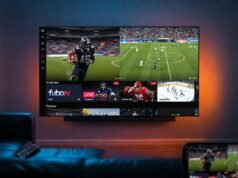
3. Fubo (FuboTV)
Overview: Fubo built its identity around sports, and football (soccer) has always been central to its proposition. In 2026, Fubo offers one of the broadest live football channel bundles of any US streaming service.
Key Features: Live TV channel bundle including major sports networks, cloud DVR (up to 1,000 hours on premium tiers), 4K streaming on select matches, and up to 10 simultaneous streams.
Supported Leagues: Premier League (via NBC/Peacock channels), Champions League, La Liga, Serie A, Bundesliga, MLS, Liga MX, international friendlies, and World Cup qualifying.
Availability: United States, Canada, Spain.
Pricing: Starts at approximately $79.99/month in the US for the base Pro plan.
Pros: Widest range of live football channels of any US streaming bundle; excellent DVR functionality; strong 4K offering; good interface for channel-switching during busy matchdays.
Cons: Price point is high compared to single-sport alternatives; primarily US-focused; canceling mid-contract has historically caused friction.
Best For: US cord-cutters who want a full live TV replacement with the broadest possible football coverage.
4. Paramount+
Overview: Paramount+ is the home of Champions League football in the United States, holding exclusive US broadcasting rights to UEFA’s flagship club competition. It has positioned itself as an essential app for American football fans.
Key Features: Every UEFA Champions League match live and on-demand, UEFA Europa League coverage, full-match replays, and extended highlight packages through CBS Sports HQ integration.
Supported Leagues: UEFA Champions League (all matches, US), UEFA Europa League (US), NWSL, and select international matches.
Availability: United States, United Kingdom, Canada, Australia, Latin America, and several other markets (football rights vary by region).
Pricing: $7.99/month (Essential, with ads) or $12.99/month (Paramount+ with SHOWTIME, ad-free) in the US.
Pros: Unbeatable for Champions League coverage in the US — every single match; very competitive pricing; strong app performance; excellent replay and on-demand library.
Cons: Outside the US, football offering is considerably thinner; limited domestic league coverage; not a one-stop football shop for fans who need more than European cups.
Best For: US-based Champions League fans; the best value option for following European club football in America.
5. Peacock
Overview: NBCUniversal’s Peacock is the exclusive home of Premier League football in the United States — a position it has held since 2022 and reinforced with a landmark rights extension through 2028.
Key Features: All 380 Premier League matches live, Premier League Pass for on-demand access, NBC Sports integration, expert punditry with familiar voices, and multi-device support.
Supported Leagues: Premier League (all matches, US), La Liga (selected fixtures), international football, and NWSL.
Availability: United States.
Pricing: $7.99/month (Premium) or $13.99/month (Premium Plus, ad-free) in the US.
Pros: Complete Premier League coverage without missing a single match; trusted NBC Sports presentation team; reasonable pricing for the quality and volume of content; reliable streaming performance.
Cons: US-only platform; limited football coverage beyond the Premier League; ads on the lower pricing tier affect match experience.
Best For: Premier League supporters based in the United States — an essential, non-negotiable subscription for serious PL fans.
6. OneFootball
Overview: OneFootball occupies a distinctive niche: a free-to-use football app that blends news, statistics, and live match streaming into one comprehensive platform, using a pay-per-view model for premium matches rather than a subscription.
Key Features: Live match streams (pay-per-view), live scores, news aggregation, transfer tracker, video highlights, club-specific channels, and a personalized feed based on the teams you follow.
Supported Leagues: Bundesliga, Liga MX, EFL (select), MLS, various lower divisions, international competitions, and a growing catalog of leagues in Asia, Africa, and South America.
Availability: Global — available in most countries.
Pricing: Free for news, scores, and highlights. Live match streaming varies — typically $1.99–$4.99 per match or bundled passes for selected leagues.
Pros: Genuinely global availability; excellent free tier for following scores and news; pay-per-view model suits casual fans who don’t want a subscription; great for following multiple teams across different leagues.
Cons: Not ideal for fans wanting wall-to-wall live streaming of a single league; streaming quality occasionally inconsistent on some regional servers; per-match costs add up for heavy viewers.
Best For: Global football fans who follow multiple leagues casually; fans in regions underserved by other platforms; anyone who wants a free, comprehensive football companion app.
7. beIN SPORTS CONNECT
Overview: beIN SPORTS is the dominant football broadcaster across the Middle East, North Africa, and parts of Asia, and its beIN SPORTS CONNECT app brings that extensive rights portfolio to mobile and connected devices.
Key Features: Live channels streaming, multi-match viewing on select plans, on-demand replays, Arabic and English commentary options, and extensive coverage of both matchday and pre/post-match programming.
Supported Leagues: La Liga (primary rightsholder across MENA), Serie A, Ligue 1, Bundesliga, AFC Champions League, FIFA World Cup qualifiers (MENA region), Turkish Süper Lig, and more.
Availability: Middle East, North Africa, Southeast Asia, United States, and France.
Pricing: Approximately $15–$25/month depending on market and package tier.
Pros: Unrivaled La Liga and Ligue 1 coverage in the MENA region; bilingual commentary options; strong local and regional football content; reliable performance across MENA markets.
Cons: Geo-restricted outside core markets; less known in English-speaking Western markets; interface can feel dated compared to newer platforms.
Best For: Football fans in the Middle East, North Africa, and Southeast Asia; La Liga fans in the Arab world.
Free vs Paid Football Streaming Apps
The honest truth about free football streaming is that genuinely free, legal, live match coverage is scarce — but it does exist.
Free apps and platforms typically offer highlights, news, live scores, and occasionally lower-league or non-premium matches. OneFootball’s free tier is the best example — solid for keeping up with the game, though live streaming of marquee matches requires payment. Some broadcasters also offer limited free streaming of specific matches as promotional windows.
The limitations are real: lower streaming quality, advertising interruptions, no access to top-tier leagues, and inconsistent reliability. Free platforms also rarely offer replays or on-demand archives.
Premium paid apps offer a fundamentally different experience. They hold official broadcasting rights, meaning you get full production quality, guaranteed uptime, legal protection, and complete league coverage. They also provide features that free platforms simply cannot replicate: 4K streams, multi-language commentary, offline highlight downloads, and year-round content libraries.
For anyone who watches football more than a couple of times per month, a paid streaming subscription almost invariably represents better value than a combination of free alternatives — and significantly better than the risk and frustration of illegal streams.
Features to Look for in a Football Streaming App
Not all football apps are built the same. Here’s what separates the best from the rest:
Streaming quality is the foundation. Look for apps that reliably deliver 1080p HD, with 4K HDR available for premium matches. Check whether quality adapts automatically to your connection speed without degrading to unwatchable resolution.
Match coverage should match your priorities. An app with world-class Champions League coverage is useless if you primarily follow the Scottish Premiership. Always verify specific league rights for your country before subscribing.
Multi-language commentary is increasingly available on leading platforms and is particularly valuable for fans watching in a non-native broadcast market — or simply those who prefer a specific commentary style.
Offline highlights allow you to save key moments for later viewing without a data connection — useful for frequent travelers.
Smart TV compatibility matters for fans who want the big-screen experience at home without cable. Verify that your streaming device (Apple TV, Fire TV, Chromecast, Roku, etc.) is supported.
Low latency streaming is critical if you participate in live social media conversations or betting during matches. A 30-second delay compared to broadcast can ruin the experience.
Safety and Legality: Why Official Apps Matter
Illegal streaming sites and unauthorized IPTV services may seem like a cost-free shortcut, but the risks are substantial.
Beyond the obvious legal exposure — copyright infringement is increasingly prosecuted in most jurisdictions — illegal streams expose your devices to malware, phishing attacks, and data theft. These sites are frequently monetized through malicious advertising that can compromise personal and financial information with a single accidental click.
The experience is also, consistently, worse. Illegal streams go down at the worst possible moments — often during injury time or penalty shootouts. Picture quality is unstable, and there is zero recourse when something fails.
The broadcasting rights system also directly funds the game. League revenues from legitimate streaming deals finance transfers, stadium development, grassroots football, and the wages of players at every level of the pyramid. Bypassing that system has real consequences for the sport.
Use official, licensed platforms. The pricing is more accessible than it has ever been, and the experience is incomparably better.
The Future of Football Streaming
The next frontier of football streaming is already taking shape in 2026, with several developments poised to transform the experience fundamentally.
AI match highlights are already deployed by DAZN and OneFootball, generating personalized highlight reels within minutes of the final whistle — curated not just by goals, but by the specific players, teams, and match events each user has historically engaged with. As AI models improve, these highlights will become increasingly indistinguishable from human-edited packages.
Interactive viewing is emerging as a genuine differentiator. Several platforms are testing interfaces that allow viewers to switch camera angles mid-match, access live formation trackers, pull up player biometrics in real time, and toggle between commentary teams. This is the logical extension of the second-screen behavior that has defined football viewing for the past decade.
VR stadium experiences remain in early stages but are attracting serious investment from clubs and broadcasters alike. The technology now exists to place a viewer in a realistic virtual approximation of a stadium seat — and as headset hardware becomes more affordable and comfortable, VR match attendance could become mainstream by the end of the decade.
Personalized match feeds represent perhaps the most commercially exciting development: AI-driven broadcasts tailored entirely to individual viewers, where camera angles, commentary focus, statistical overlays, and even advertising are all adapted in real time to individual preferences. The “universal broadcast” is slowly giving way to the “personal broadcast.”
Conclusion
The best football streaming app in 2026 is, ultimately, the one that serves your specific leagues, location, and budget.
If you’re a US-based fan, Peacock is non-negotiable for the Premier League, Paramount+ is essential for the Champions League, and ESPN+ rounds out coverage with La Liga and Bundesliga. Fubo is the premium option if you want everything under one roof.
For global fans, DAZN offers the broadest international rights portfolio and is the most logical single subscription if you travel or live outside Western markets. OneFootball is the ideal complement — free for daily news and scores, with pay-per-view options when you need live coverage of something outside your main subscription.
Fans in MENA and Southeast Asia should look to beIN SPORTS CONNECT as their primary platform, given its unrivaled regional rights portfolio for European football.
Whatever you choose, the fundamental advice remains consistent: subscribe to official, licensed platforms. The quality is better, the reliability is better, and your subscription directly supports the game you love. In 2026, there has never been a better — or more affordable — time to watch football live from anywhere in the world.